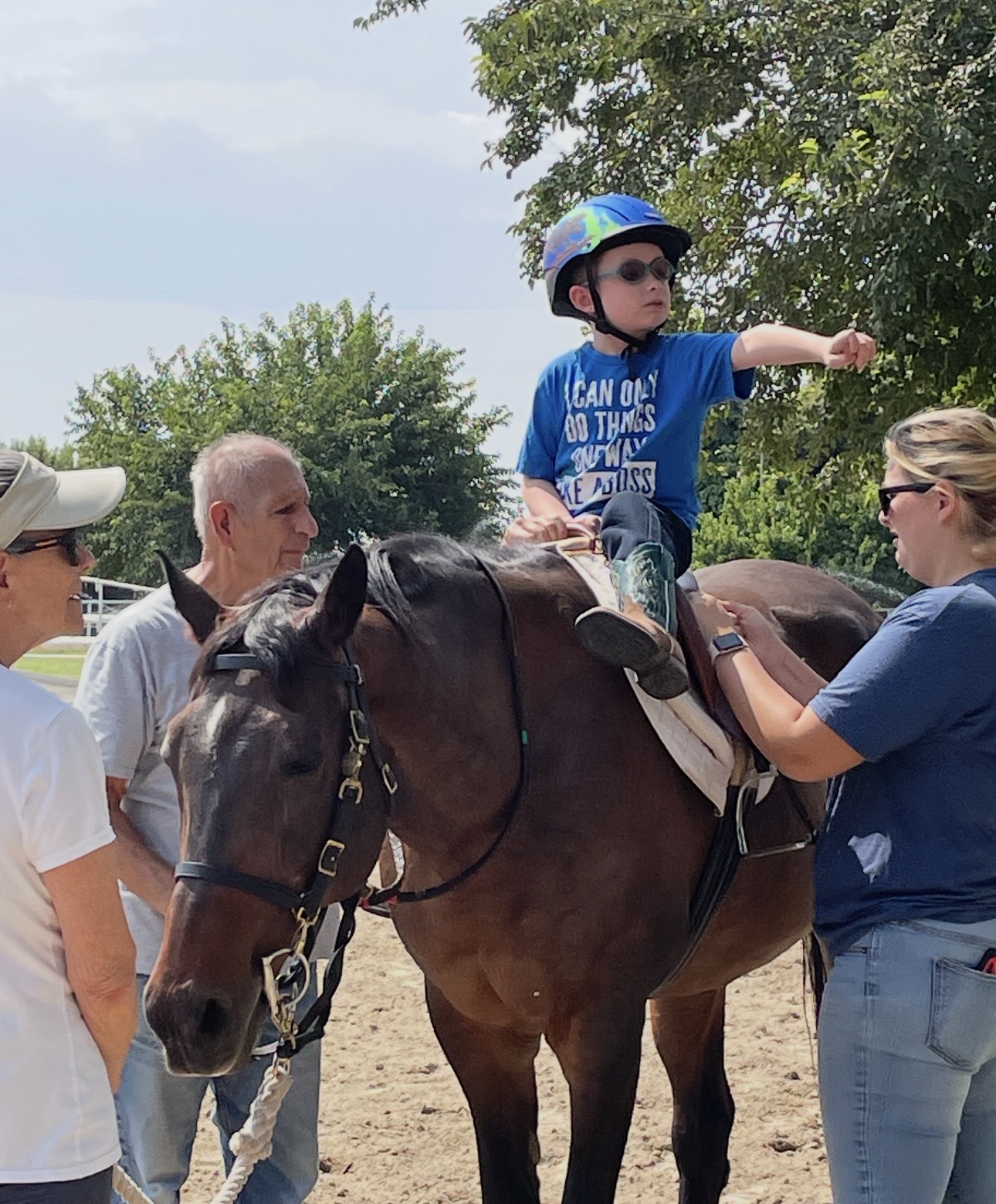


BAKERSFIELD, Calif. (KERO) — Bennett Houchin was diagnosed as non-verbal autistic as a young child. His parents, Camille and Ben Houchin, tried numerous doctors and treatments before finding Mastering Abilities Riding Equines — a non-profit known as MARE. Now 12, Bennett is talkative, still riding horses, and doing it alongside his brother Sammy.
Camille said she knew something was different about Bennett when he was around 2 years old, and her mother pushed her to act.
"If he had a heart condition, would you not go find him the best cardiologist? I said, Yeah, mama, I would. And she's like, How is this any different? You go get him the help he needs. And I, we did, I did." Camille said.
She enrolled Bennett in Bakersfield City School District programs at age 3 and a half. He began verbalizing around age 6.
Camille said the progress MARE has helped Bennett make did not happen overnight.
"It takes really a village and it's a lot of hard work and it doesn't happen overnight and it takes a lot of dedication, especially as a mom, as a family, and all the back family, the aunts, the uncles, the grandmas, the grandpas." Camille said.
She said MARE has done something the other programs could not fully replicate.
"This place has built confidence, calmness, help him to like learn to not get because there's a lot going on and you can see there's other horses and stuff, and that's one of Bennett's biggest things is concentration." Camille said.
Ben described what makes the bond between his son and a horse unique.
"When it comes to horses, it's like actually having to have patience and trust the animal and everything, and then as soon as they know that you trust, they trust, and then you get a bond between the horses." Ben said.
He said that bond was especially clear with one horse named Reyna.
"Not a lot of people can handle her. Sometimes she gets fits and stuff, but he would get on her and she would be perfect. She runs smoothly and he's happy." Ben said.
Ben said watching his son on a horse reveals a side of him not always visible elsewhere.
"You just see him being more calm than he usually is. Sometimes he gets his ticks going, his rocking and everything, but then when he's on the horse, he's just calm. You can see the big difference in him." Ben said.
"And that little bit of confidence he gets from riding the horse." Ben said.
Bennett's trainer at MARE, Misty Mosard, is the barn manager and instructor at the facility. She said she quickly learned how to reach Bennett when they first met.
"I realized he loves cars, he loves trains. Once we incorporated that into his lessons I had his attention. I gave him that freedom to be confident and have fun at the same time." Mosard said.
Mosard said the way MARE teaches riding is itself a tool for building communication.
"Once we get them into that habit of your horse is not going to go anywhere until you tell them to walk on, that's an incentive to speak. So I think those little ways that we teach them how to ride here, saying walk on and 123, it resonates in their entire life." Mosard said.
She said that language follows riders home.
"I've had some of our other clients say, I hear my kids say that at home, not just at MARE. They say that at home and telling mom and dad to walk on, to get out of the way. So not only is it helpful here, but it resonates in a lot of these families' homes." Mosard said.
Mosard said the majority of riders at MARE are on the spectrum, but she is intentional about how she frames their experience.
"It's not disabilities they're able to ride horses here, so we're trying to show them their abilities here and boy, like Bennett, he shows us every week, you know, nice loud voice, all his posture, he likes to talk about all the things." Mosard said.
She said the effectiveness of horses comes down to energy.
"If you're anxious, that horse is going to feel that same way. They can feel your heartbeat from 6 ft away. They know what they're doing, they're professionals at their jobs here." Mosard said.
Mosard said one of Bennett's horses, Smoothie, demonstrates that connection clearly.
"Smoothie is a great listener. All Bennett has to say is 1231, and his horse's ears turn around. He's listening. He stops in his tracks." Mosard said.
She said that dynamic teaches emotional regulation beyond the arena.
"If I'm in a bad mood, my horse is going to be in a bad mood. They have to be calm and breathe, and that reflects on how their horse is gonna react to them and how their lesson's gonna go." Mosard said.
Camille said Mosard has become more than just a coach to the family.
"She's the best trainer that I think Bennett has ever had, and she's actually turned out to be one of my very best friends. She's like family. She challenges him." Camille said.
Camille said Bennett is enrolled in nearly 6 programs in addition to school, speech therapy, and MARE. The family has no plans to leave.
"We're here and we've been here for what, 7 years now, almost. We're not going anywhere." Camille said.
This story was reported on-air by a journalist and has been converted to this platform with the assistance of AI. Our editorial team verifies all reporting on all platforms for fairness and accuracy.
Stay in Touch with Us Anytime, Anywhere: