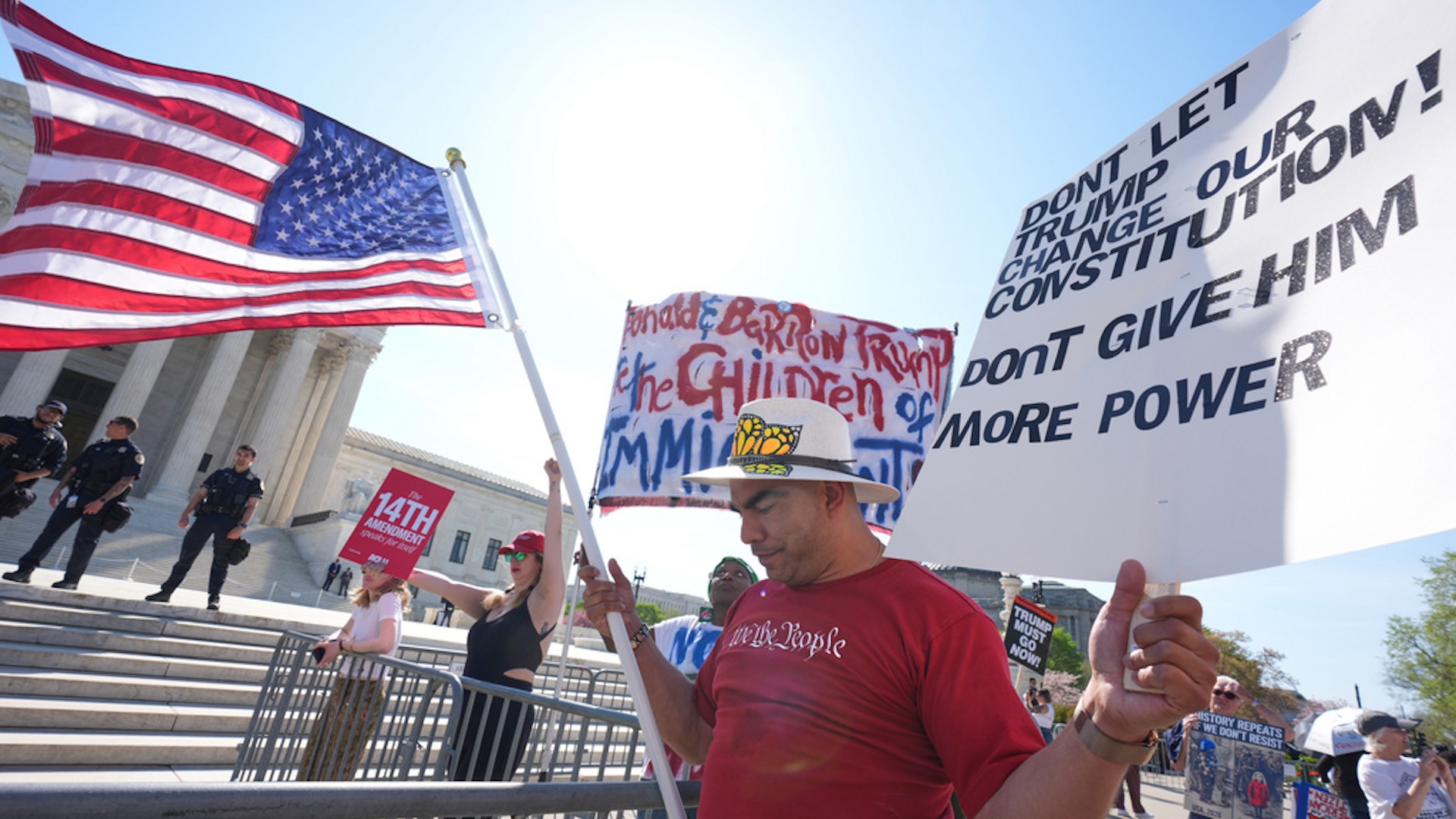


The Supreme Court ruled against the Trump administration’s effort to end birthright citizenship for children born in the United States, including those born to undocumented migrants.
IN CASE YOU MISSED IT | States can ban transgender athletes from participating in women's sports, Supreme Court rules
The ruling was 5-4, with Chief Justice John Roberts and Justice Amy Coney Barrett joining the court's three liberal justices in the majority. Justice Brett Kavanaugh concurred in the judgment in part and dissented in part, while Justices Clarence Thomas, Samuel Alito and Neil Gorsuch dissented.
The decision is a major blow for President Donald Trump, who signed the executive order at the center of the case on the first day of his second term. The White House described the order as part of an effort to “repair the United States immigration system.”
Reacting to the ruling, Trump called on Congress to change the law.
"The Supreme Court upheld Birthright Citizenship, which is too bad for our Country, but we can easily make it up in Congress through Legislation, with the support of the President, that has now been determined during this process," Trump wrote on Truth Social. "No long and unwieldy Constitutional Amendment is necessary! Congress should start TODAY to work on ending expensive and unfair to our Country, Birthright Citizenship. They will have my Complete and Total Support! President DONALD J. TRUMP."
The case centered on the first section of the 14th Amendment, which says all people born or naturalized in the United States and “subject to the jurisdiction thereof” are U.S. citizens.
Roberts wrote that children born in the U.S. to parents who are unlawfully or temporarily in the country meet the requirements of the 14th Amendment. “Under the Constitution, they are citizens at birth.”
Democratic-led states challenging the order argued that the amendment, enacted in 1868, guarantees birthright citizenship to nearly everyone born in the United States.
IN CASE YOU MISSED IT | Mail-in ballots will keep their grace period under new Supreme Court ruling
The Migration Policy Institute and Pennsylvania State University’s Population Research Institute estimated that more than a quarter of a million babies born in the U.S. each year would have been affected if the ruling had gone in Trump’s favor.