One bullet at a time.
The gunmen recorded their own crimes —men with phones in one hand, guns in the other, documenting their brutality frame by frame. Trophy videos.
These descendants of the Janjaweed — the notorious paramilitary force accused of genocide in Darfur decades ago — have returned for what one observer calls "the greatest humanitarian collapse of the twenty-first century."
After three months of pressing Sudan's army-controlled government, we became the first American media allowed into the country since the massacre in Darfur. We crossed the Nile where it winds through the center of Sudan, drove through brutal deserts for more than a thousand miles, entered a capital destroyed by two years of urban warfare — seeking to document not through statistics, not through statements from afar, but through the people who survived it.
The State of Play: A Nation Torn Apart

For nearly three years, Sudan has been locked in a brutal struggle between two former allies turned mortal enemies. On April 15, 2023, fighting erupted between the Sudanese Armed Forces — the SAF, led by General Abdel Fattah al-Burhan—and the Rapid Support Forces, the RSF, commanded by General Mohamed Hamdan Dagalo, known as Hemedti.
The war's origins lie in a power struggle over who would control Sudan after both generals seized power in a 2021 coup, overthrowing a fragile civilian-led transition. The breaking point came over a seemingly bureaucratic question: how quickly the RSF would integrate into the national army. The RSF demanded ten years. The army insisted on two. Neither would bend.
But this is no ordinary civil war. The RSF traces its lineage directly to the Janjaweed militias—the "Devils on Horseback"—who carried out genocide in Darfur in the 2000s under dictator Omar al-Bashir's orders. When the RSF was formalized as a paramilitary force in 2013, it kept the same brutal DNA.
The toll has been catastrophic. As many as 400,000 people were killed. Thirteen million displaced—the world's largest displacement crisis. Thirty-three million needing humanitarian aid. Two declared famines. And atrocities that have drawn accusations of ethnic cleansing, war crimes, and crimes against humanity from the International Criminal Court.
Regional powers have chosen sides, turning Sudan into a proxy battlefield. The United Arab Emirates funnels weapons to the RSF through Chad and Libya, drawn by Sudan's gold. Egypt, Saudi Arabia, and Iran back the SAF.
Witnesses to War Crimes

We arrived at a refugee camp in Al Dabbah, nearly 500 miles from El Fasher. To reach here, survivors traveled hundreds of miles through the desert, many dying from violence along the way and also from lack of water.
Mohamed Abdallah Amed, an engineer, was among more than 600,000 people trapped when the RSF surrounded El Fasher—the Sudanese military's last stronghold in the Darfur region. For eighteen months, the paramilitary laid siege.
"The siege was completely tight around the city, no food supplies could enter," he told me. "In the city, there was nothing left to eat; it was a famine, a total famine, nothing at all."
Starvation as a weapon of war.
Then, in late October, government forces suddenly retreated. The RSF celebrated its takeover and launched what witnesses describe as a new campaign of genocide.
"It was a scene you simply cannot imagine," Mohamed said. "The streets were all littered with bodies. You would walk past the dead, past those who were bleeding, past those whose bodies were broken or severed. They were screaming, calling for an ambulance, crying, 'Help me!' 'Bind my wounds!' or 'Take me to the hospital!'"
Satellite images analyzed by Yale's Humanitarian Research Lab confirm his account—piles of bodies visible from space near the university, near dirt berms the RSF built to funnel fleeing civilians into kill zones. As many as 60,000 murdered. So much blood that the soil itself turned red — visible even from orbit.
Mohamed made a desperate escape through RSF checkpoints, where fighters separated men from women and children. "They were shouting racial slurs at us: 'Why didn't you leave earlier?' They called us soldiers. They were about to liquidate me when a vehicle pulled up."
He fled into the night. His body still carries shrapnel that was never removed.
The Doctors Who Stayed
Most of the doctors in the refugee camp are survivors of the El Fasher Massacre. Dr. Ikhlas Abdullah once delivered babies. By the end of the siege, she oversaw only death at the last hospital still standing.
Were children dying of starvation? "Yeah, a lot of them," she said in English, then switched back to Arabic. "A massive number of children died from malnutrition. They were arriving in a state of death at our hospital."
The doctors improvised with whatever they could find. But they didn't have the micronutrients necessary to prevent organ failure in the severely malnourished.
On the day the RSF entered El Fasher, Dr. Abdullah was supposed to go in for her shift. She couldn't reach the hospital. "The entire street was nothing but falling shells, one after another. We thought the RSF were closing in, so we retreated, just barely getting away."
Days after she reached safety in the refugee camp, a pharmacist colleague who escaped later brought devastating news. "She told me about the people who didn't leave after us. She said the people who were still in the hospital, every single one of them was killed."
The World Health Organization reports the RSF killed 460 people who remained in the hospital. Six doctors were kidnapped for a $250,000 ransom. Their fate remains unknown.
The RSF released trophy videos of their atrocities.
The Orphans of El Fasher

Ahmed Al-Zayn wakes each morning in the camp with the six children she cares for. Two are orphans — among the two thousand children, aid groups say, who lost their parents in El Fasher.
She took in Omran, five years old, and Munzir, three, after their parents were slaughtered in a market by the RSF.
Her son Mohammad, now nineteen, helped raise them. For months, they remained in the house as the shelling intensified. When the RSF issued an ultimatum — leave or die — seventeen members of the extended family snuck out by night.
Rogue RSF units were kidnapping boys. Ahmed feared for all the children.
They walked until they reached a village. There was no food except for gumbas — dry animal feed. "You take the gumbas, soak it in water, and drink it," she explained. The children survived on this, rationed to a single meal per day.
When they finally reached the camp, the boys received treatment for malnutrition. Munzir weighed only four kilograms in El Fasher—less than nine pounds. Now he's fifteen kilograms. More than thirty-three pounds.
What does she want for the orphans' future? "May God raise them and let them grow up. And that they learn, and keep learning. And that they become doctors, become something great."
On the side of the tent, her six-year-old niece Rahik draws with chalk.
What is that? I asked.
"A bullet," she said.
Did you see that?
"Yes. In El Fasher."
They escaped El Fasher. But the war is still with them.
Khartoum: A Capital in Ruins
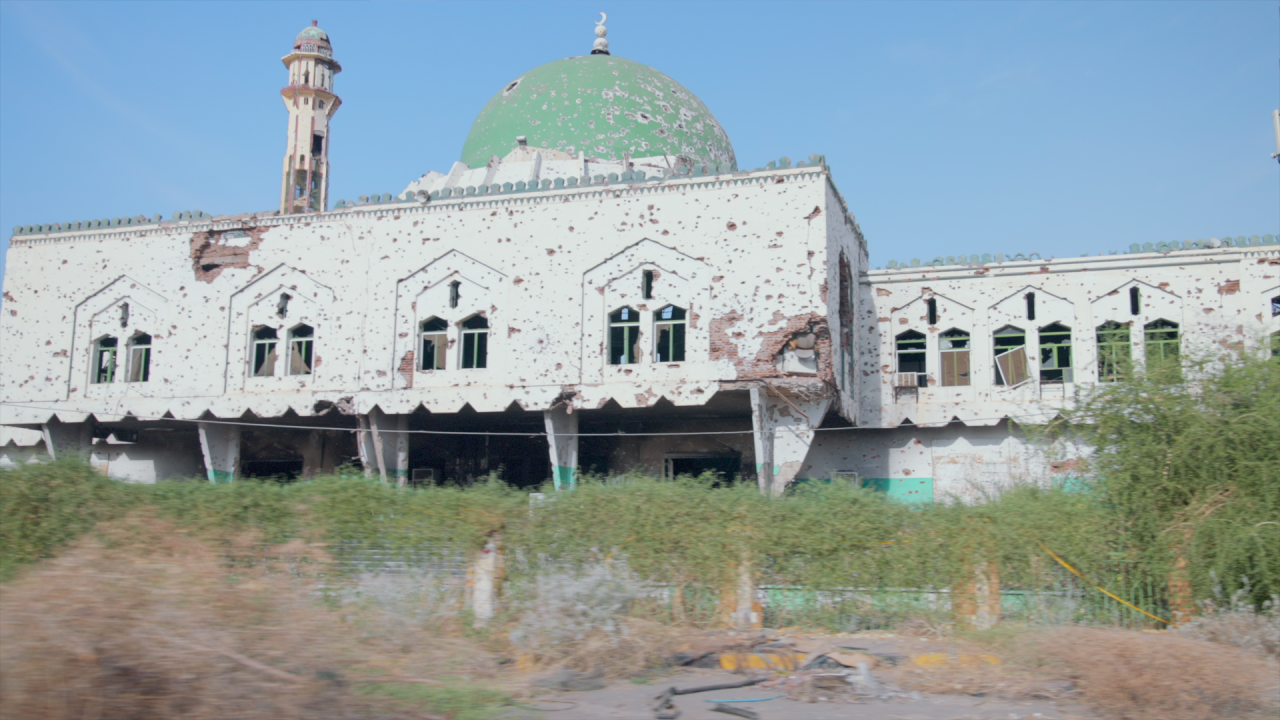
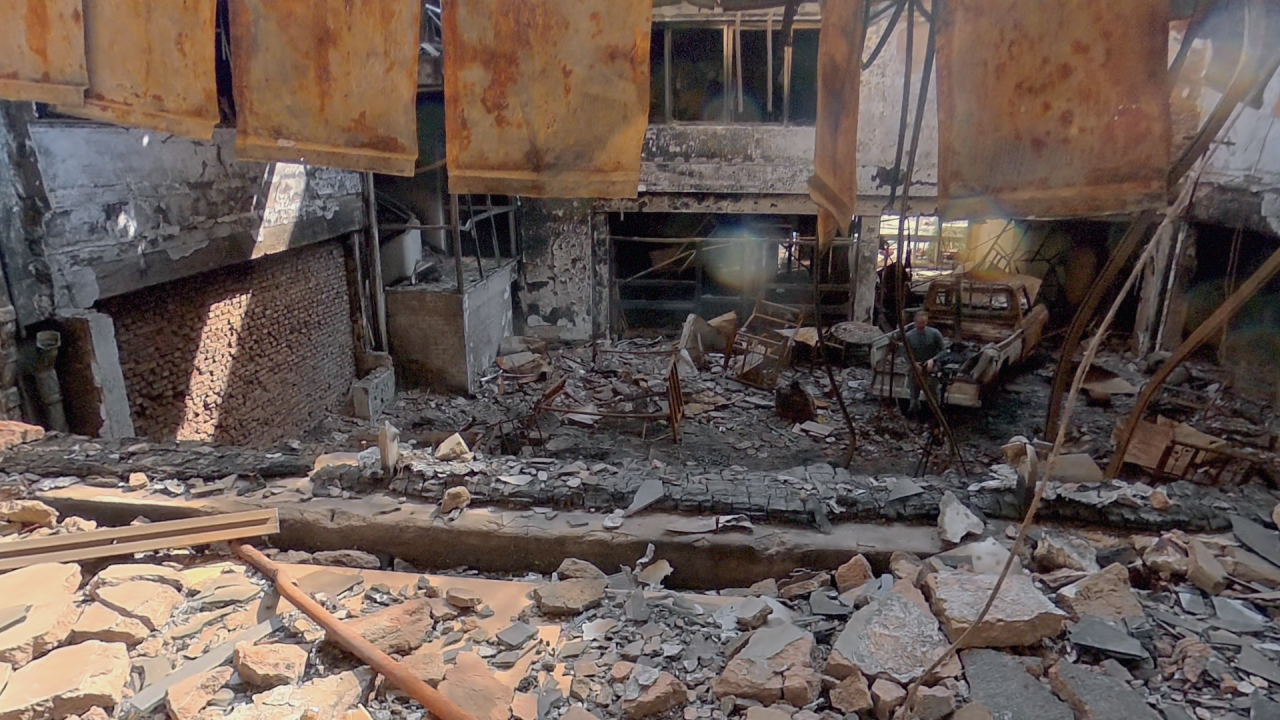
Across Sudan's vast Nubian Desert, we headed to Khartoum — a symbol of the state's collapse. Fighting raged here for two years before the Sudanese army declared the RSF driven from the city.
What remains tells much of the story.
What happened in Khartoum wasn't a single moment. It was a slow-motion unraveling. A capital city falling into a kind of madness that millions were forced to flee.
In Khartoum State alone, more than two million people were forced to flee. Now some are returning.
Because the RSF blocked families from cemeteries during their occupation, people buried their loved ones where they could, including in schoolyards.

Muayyani Salwa, who stayed here during the war, witnessed worse atrocities. "There are girls who were literally snatched away from their families. If a girl doesn't go 'willingly,' they use force."
Salma Al Khalifa, a government minister responsible for combating violence against women and children, confirmed sexual violence engulfed the capital. "We have victims who are eighty-five and we have a child of one year. So no one was spared. That's why I'm talking about using it as a weapon of war because sometimes it's even not logical."
She described mass rapes. Gang rapes that continued for months. Women who became pregnant not knowing who the father was.
Do they know what they're doing is evil?
"Oh yes," she said. "They know."
When they're attacking women in very patriarchal communities like Sudan, she explained, "they're attacking men through the bodies of women... You took away their manhood. So you're not man enough."
Fleeing the New Frontline

We went to a junction on Khartoum's outskirts, hoping to meet people fleeing the RSF's new advance into Kordofan. We did. Immediately.
Ibrahim Ahmed Abdal-Raziq and his extended family — fourteen people crowded into a car — barely escaped. "I can't even describe it—it's like I've arrived here only after meeting my own death. You know what I mean? It's like I've only just now come back to my senses and realized I'm alive."
The RSF soldiers who came to his house? "Truly, people of every age were there—seventeen, sixteen, fifteen."
Child soldiers. And they would kill you without a second thought.
One Girl's Hope
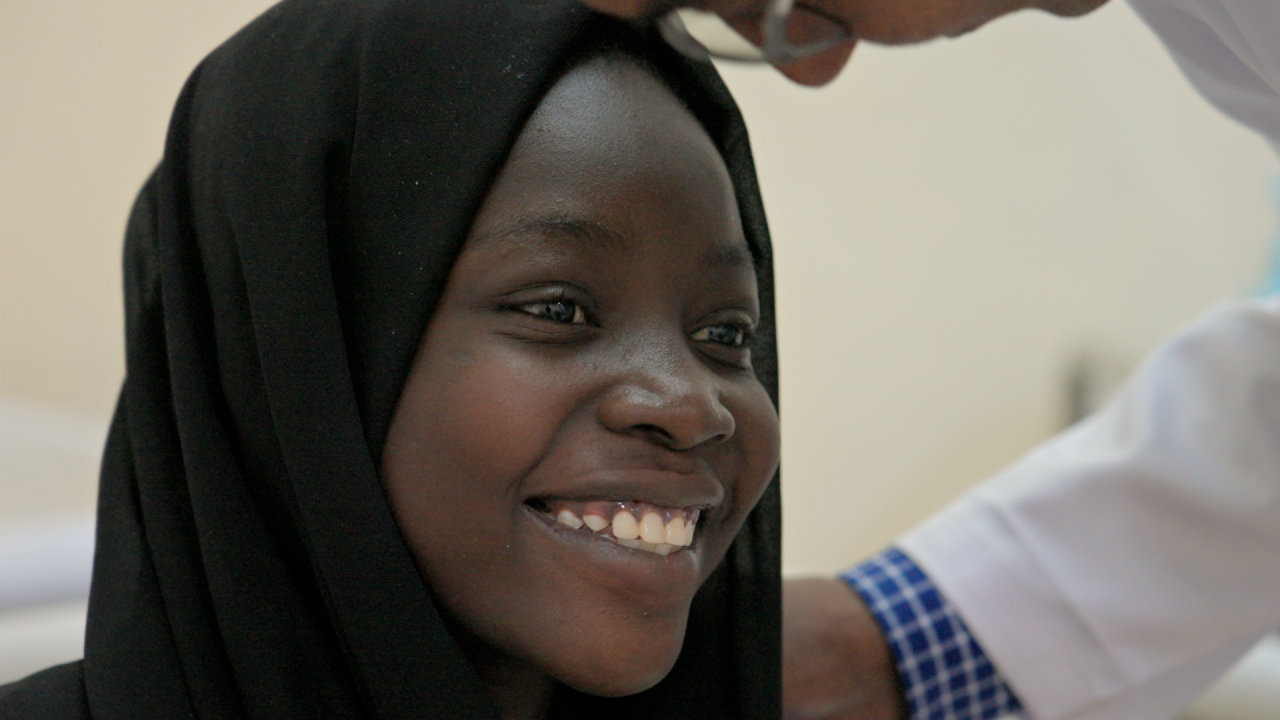
The timing was extraordinary. The day we asked to meet Dr. Jamal Eltaeb — the surgeon who ran the last-standing emergency facility near the front line during the worst of the fighting — he said come today, and you'll meet a special patient.
During a tour of the Al Nao Hospital in Omdurman, the orthopedic surgeon and head of traumatology stopped. He introduced us to a fifteen-year-old girl. Even by the horrific standards of this war, what you see is shocking.
For sixteen months, Noon has lived with protruding bones from both legs — injuries from a drone strike that killed her sister.
Her family was living on an island in the Nile occupied by RSF forces. Due to fighting and displacement, proper treatment remained out of reach. "Due to all this displacement and chaos, more of my bones broke," she said.
Dr. Eltaeb has spent years treating cases like Noon's. For nearly two years, as war tore through Khartoum, he and a small, determined team ran the city's last major lifeline. For this, he was named the winner of the $1 million Aurora Prize for Awakening Humanity.
You could have left, I told him. You could've gone to another country. Many millions have.
"But we choose, not me alone," he said. "It's the right thing to do."
What was your worst day?
He described a bombardment at nearby Sabreen Market. "The result of that bombardment was around 200 injured people... and most of them are women and children."
They came on the backs of pickup trucks. He had to decide who could be saved, searching among the dead bodies for who was alive and who was not.
"That was a difficult day."

The next day, Dr. Eltaeb invited me into his operating room. Fresh X-rays laid bare the bones that had been exposed through Noon's skin for months. As he scrubbed in, Noon was already asleep under anesthesia.
The doctor began the surgery, explaining each step—not for me, but for medical students who gathered to learn from a surgeon who has spent years treating bodies broken by war.
Hours later, he told us the operation was successful. But Noon needs more surgeries to walk again.
What do you want to be someday? I asked her.
"A doctor," she said. Like Dr. Eltaeb.
In 2025, he was awarded the Aurora Prize, which recognizes those who risk their lives to save others. Now he has a million-dollar prize to distribute to help others help others.
How do you not allow the human cruelty you've seen make you lose your spirit?
"Yeah, I don't know," he said. Then: "I believe I will do it again if something happens. Again."
For a generation raised in war, the will to begin again remains. Survival itself becomes an act of defiance. Survival and bearing witness — a way to compel the world to confront the crisis in Sudan.