

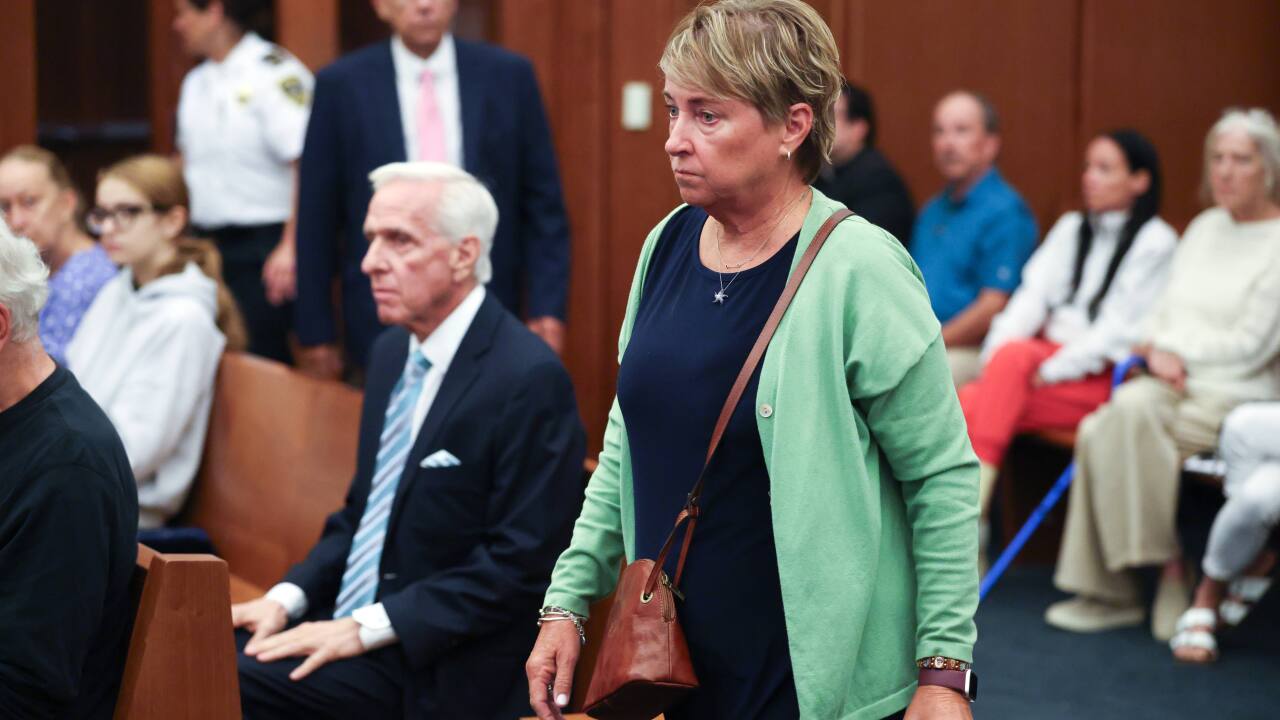

Lindsay Clancy was "begging for help" in the months leading up to killing her three children and attempting to end her own life, Clancy's former mother-in-law testified for the defense Tuesday in the fourth week of her murder trial.
___
EDITOR'S NOTE: This story includes discussion of suicide. If you or someone you know needs help, the national suicide and crisis lifeline in the U.S. is available by calling or texting 988.
___
"Lindsay was struggling — we were all concerned," said Susan Clancy, mother of Patrick Clancy, who found the Massachusetts couple's children after they had been strangled in the family basement in January 2023. Lindsay Clancy also attempted to take her own life that night and was left paralyzed. Lindsay and Patrick Clancy are now divorced.
The trial centers not on whether Lindsay Clancy killed her children on Jan. 24, 2023, which her lawyers do not dispute, but on her state of mind at the time. Her attorney argues she should not be held criminally responsible because she was suffering from postpartum psychosis, a rare mental illness linked to the stress, sleep deprivation and hormonal changes that follow childbirth.
Former mother-in-law says Lindsay was 'begging for help'
Susan Clancy's testimony echoed emotional accounts the day before from Lindsay Clancy's mother and sister, who recounted for jurors how they saw her become increasingly anxious, paranoid and suicidal starting in the fall of 2022.
Susan Clancy, who, like Lindsay, worked as a labor and delivery nurse, said in Plymouth Superior Court that she and her former daughter-in-law were close and described Lindsay as a "wonderful mother" who was "very nurturing, very loving."
Susan Clancy said that Lindsay was open with her about struggling and asked for her mother-in-law's support. The jury was shown texts between Lindsay and Susan Clancy in which Lindsay spoke about fears that she had developed a dependence on benzodiazepines, but couldn't sleep without taking them.
"I'm not okay and I'm terrified of taking meds tonight," Lindsay texted her mother-in-law on Nov. 30, 2022, two months before the killings.
On Monday, Lindsay Clancy's mother, Paula Musgrove, said her daughter was scared of sleeping alone, became increasingly paranoid and believed the medications she was taking "were destroying her mind."
That December, Lindsay Clancy told her mother and her then-husband, Patrick Clancy, that "she had thoughts of harming the children," Musgrove said. Lindsay Clancy's sister Allison Ozga testified that at the end of December, Lindsay told her she had experienced suicidal thoughts every day for a month.
Two sides dispute what symptoms show
Prosecutors argue that Lindsay Clancy planned the Jan. 24, 2023, killings and contrived to get her husband out of the house by sending him to get takeout and to the pharmacy. They have shown through texts and photos that she performed many normal activities the day of the killings, including taking her children to the doctor and playing with them in the snow, and have questioned the seriousness of her suicide attempt.
Lindsay Clancy's attorney, Kevin Reddington, has argued that in addition to suffering from postpartum psychosis, she had bipolar disorder and that antidepressants prescribed after the birth of her third child worsened her condition.
On the day of the killings, Lindsay Clancy said she heard a voice telling her, "This is your last chance. Kill the children so you can kill yourself," according to her lawyer.
The defense has argued that Lindsay Clancy was overmedicated and that her care was disjointed, with doctors not speaking to one another or sharing notes. Her doctors have testified they never saw her exhibit signs of mania or psychosis, though she did repeatedly talk of feeling suicidal.
A psychiatrist reviews Lindsay's treatment
Dr. Donald Condie, a clinical and forensic psychiatrist who didn't treat Lindsay Clancy but reviewed her medical records, testified Tuesday that she reported symptoms consistent with postpartum anxiety in September 2022, around the time she was preparing to return to work after the birth of her son Callan. Her records documented worsening symptoms over the following months as she saw multiple providers and was prescribed several medications.
Condie said Clancy's medical records indicated she reported hearing a voice, but conceded on cross-examination that she had not reported hearing voices before the children were killed.
RELATED STORY | Lindsay Clancy trial reveals new details about mental health before killings
At the start of the trial, Patrick Clancy described the horror of returning home to find his dead children. Prosecutors played a seven-minute 911 call in which he can be heard finding the bodies and telling a dispatcher, "She killed the kids!"
If convicted of murder, Lindsay Clancy faces life in prison without parole. If found not guilty because of a lack of criminal responsibility, she would be committed to a state mental health facility.
