

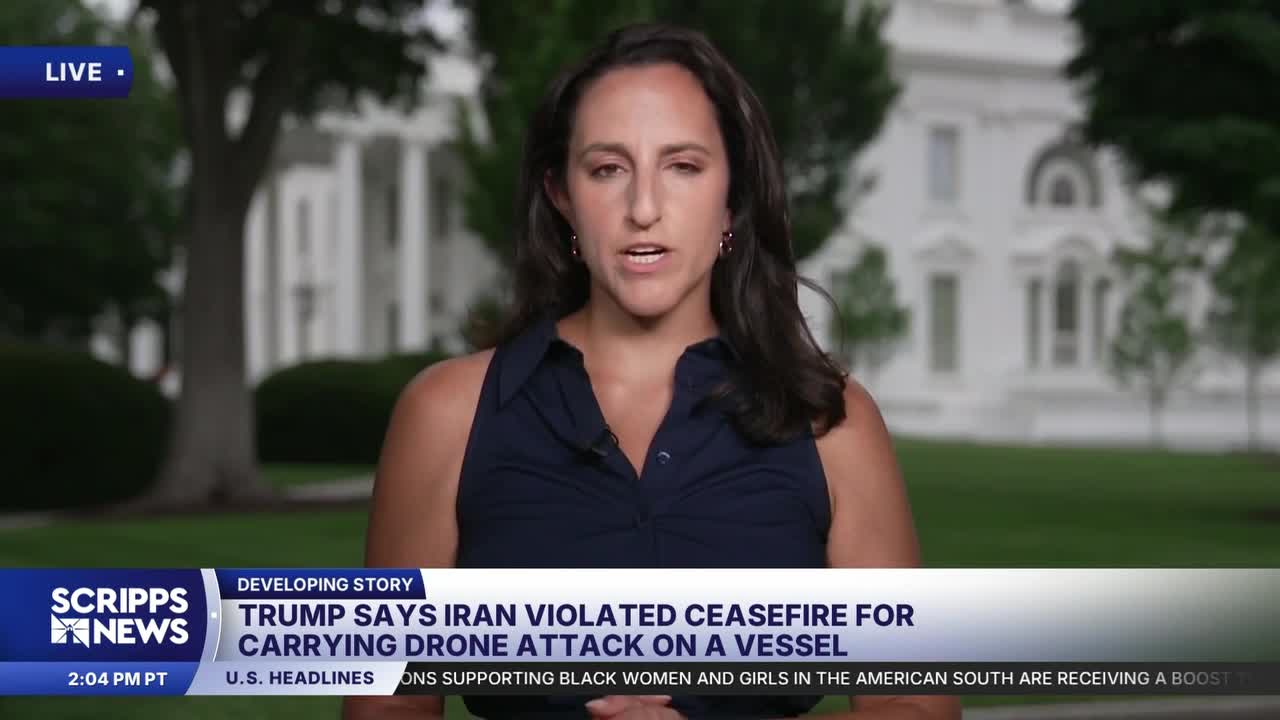


The U.S. military said Saturday it had struck multiple targets in Iran at President Donald Trump’s direction, continuing a string of attacks that have shaken the war’s uneasy ceasefire.
The military said in a post on X that “Iran had a chance to honor the ceasefire agreement” but “elected not to” when its forces attacked a ship near the Strait of Hormuz earlier Saturday.
Iranian state TV reported explosions north of the Strait of Hormuz.
On Friday, Iran claimed it struck U.S. military targets in the Middle East region in response to the U.S. retaliatory strikes around the Strait of Hormuz. Bahrain, where there is a U.S. military base, reported Iranian drone attacks on its territory early Saturday morning.
The attacks in the Persian Gulf show the danger of the Iran war again spinning out of control, even after Iran and the U.S. reached an interim deal to try to agree on a final accord to end the conflict.
The U.S. had launched airstrikes overnight in response to an Iranian drone attack on a container ship trying to leave the strait on Thursday, continuing a string of attacks that have shaken the war's uneasy ceasefire.
CENTCOM says U.S. aircraft targeted Iranian radar and munitions storage sites, striking locations where missiles and drones had been stockpiled.
— U.S. Central Command (@CENTCOM) June 26, 2026
"The unwarranted aggression against commercial shipping by Iranian forces clearly violated the ceasefire. Furthermore, Iran’s dangerous behavior undermined freedom of navigation as commerce increasingly flows through the vital international trade corridor," CENTCOM said in its statement.
President Donald Trump on Friday accused Iran of violating the ceasefire agreement, calling the attack on shipping "foolish." Before the U.S. began its strikes, he appeared to preview potential consequences for Iran, telling reporters they would "find out" what response the U.S. had planned.
The incident on Thursday prompted the International Maritime Organization to pause a planned evacuation for ships in the waterway, though some vessels continued to pass through the strait regardless. The agency said it would not continue sanctioned ship movements until it had new assurances that vessels would not be targeted.
RELATED STORY | Trump accuses Iran of violating ceasefire with drone attacks in Strait of Hormuz
U.S. says MOU is still in effect
The existing memorandum of understanding between the U.S. and Iran calls for Iran to ensure safe passage through the Strait of Hormuz for 60 days from its signing. Iran was expected to undertake efforts to de-mine affected areas of the waterway within 30 days.
Following Friday's strikes, CENTCOM said the U.S. military would "ensure all aspects of the agreement with Iran are adhered to, obeyed, and in full force and effect."
Earlier on Friday, a senior U.S. official told Scripps News Iran and other countries were expected to develop a plan to ensure access to the waterway.
"A regional process will launch between Iran and GCC countries to talk through what future management of the waterway would look like to ensure that no country can ever again exert its control like Iran did in recent weeks or extort tolls and other fees from commercial traffic," they said.
Iran, meanwhile, has asserted control of the strait in its public statements.
Iranian officials said Thursday's strike against commercial shipping were not a violation of the ceasefire, but "ceasefire management."
Iran did not immediately comment on Friday's U.S. strikes.
This is a developing story and will be updated.
