

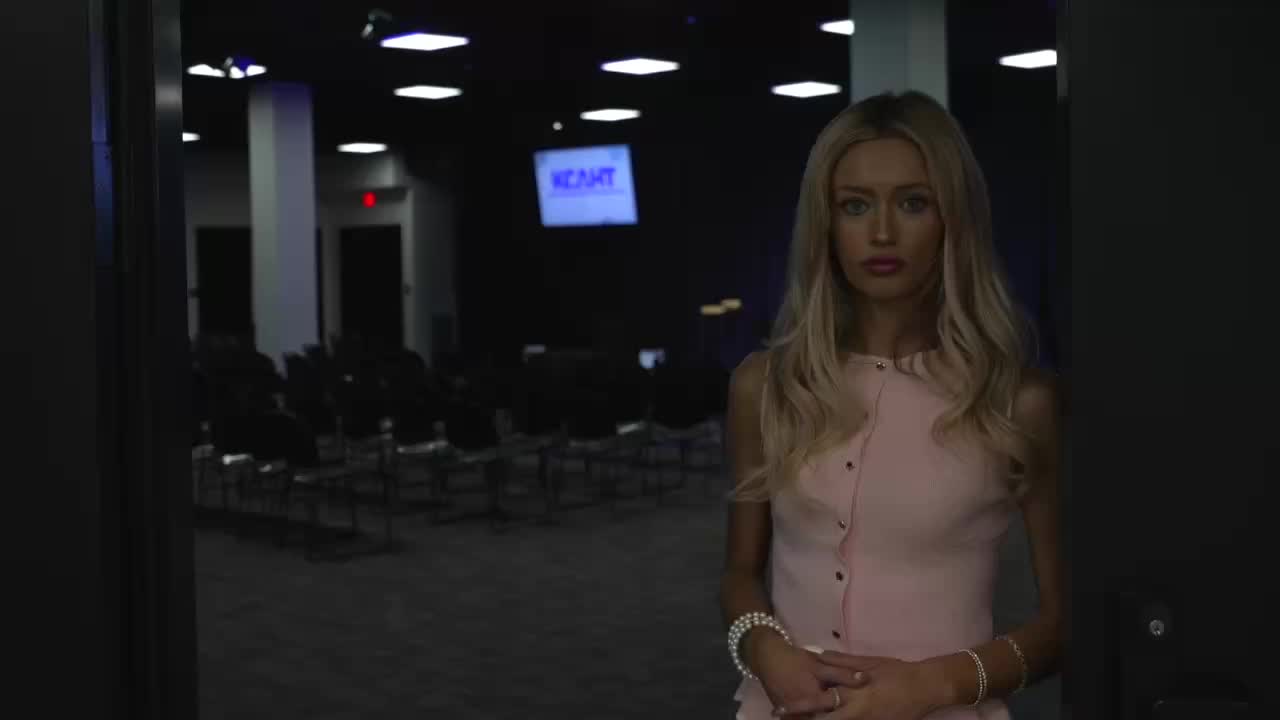


BAKERSFIELD, Calif. (KERO) — Human trafficking survivors and local advocates are working to change how people recognize exploitation, and they say the signs are often hiding in plain sight.
The Kern Coalition Against Human Trafficking held its "Fall Into Awareness" training on Sept. 17, 2026 at CityServe, bringing together local professionals to learn how to identify warning signs of trafficking in their communities.
Human trafficking survivor Ofelia Flores said she didn't realize what was happening to her while she was living through it.
"You don't know that it's not normal. You don't know you don't have a voice. You just think this is just the way it is."
Dr. Angela Look, a steering member of the Kern Coalition Against Human Trafficking, said one of the most dangerous misconceptions is that trafficking always involves kidnapping.
"Less than 1% of the cases in America is where it's kidnapping," Look said. "What is happening, kids are still living at home with their parents or maybe they're homeless or out on the street. That's where trafficking happens."
Look said that misconception can cause people to overlook victims who appear to be living normal lives.
"There could be a teacher with a student sitting in their classroom and they think, 'Well, they can't be trafficked.' That can absolutely still be someone who's being trafficked."
At the training, advocates outlined warning signs that are often dismissed or explained away; including unexpected gifts or cash, absences from school, troubling online activity, and specific language or symbols. Look said online platforms are frequently used by traffickers to groom potential victims, sometimes posing as other children.
"If parents aren't actively engaged, looking at their kids' phones or who they're talking to online, the online platforms are used incredibly often by traffickers," Look said.
She said certain symbols, including tattoos, emojis, and references to dollar signs, money bags, and crowns, can also be red flags, as can references to Figueroa Street in Los Angeles, which she described as a known trafficking hub close to Kern County.
Look said youth in foster care are among the most vulnerable, and that traffickers often use romantic relationships to manipulate victims.
"We work with a lot of youth who are in foster care who are leaving placement and they end up with a boyfriend who they think loves them and asks them to help them out by doing something which ends up being trafficking," Look said.
The coalition has worked with hundreds of trafficked children in Kern County, Look said, adding that the problem extends beyond the county's borders.
"You can no longer think this is a problem in a third world country or this is a problem only in LA because LA is so big. This is a problem happening to our kids and in fact it's taking the lives of some of our kids."
Look said anyone who suspects trafficking should gather as many details as possible and contact professionals rather than confronting a trafficker directly.
"If you don't say something, we can't do anything," Look said.
Misty Thomas-Roberts, who works with youth at Kern Bridges, said the training helps her recognize when something that seems routine might actually be cause for concern.
"If we don't know what they are, we can't spot them, right? And so I think it's very important for these trainings."
Look said the community cannot afford to wait for a situation to look extreme before paying attention.
"For too long we've somehow just turned a blind eye to it. We've driven down Union Avenue and made ourselves think that that little girl on the corner wants to be there or has put herself there by choice, and what we have to realize is that is not true. They are all victims, and we have to do better at recognizing and saying something so that we can stop this cycle."
If you or someone you know may be experiencing human trafficking, help is available through the National Human Trafficking Hotline at 1-888-373-7888. You can also text the number: 233733.
Stay in Touch with Us Anytime, Anywhere:
