

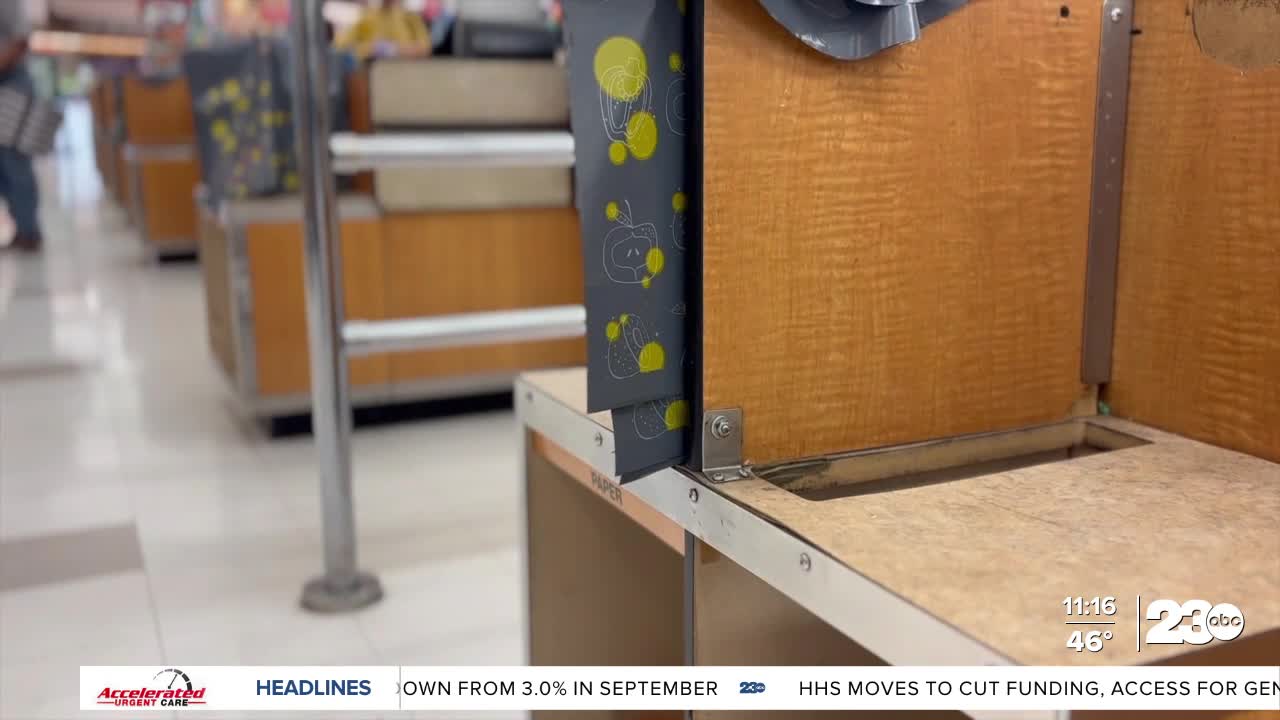


BAKERSFIELD, Calif. (KERO) — That plastic bag at checkout will soon be a thing of the past. Beginning in 2026, California retailers will fully phase out plastic bags in favor of paper and reusable options, marking another major step in the state’s effort to reduce plastic pollution.
For many shoppers, convenience has long ruled the checkout line.
Darryl Ford is one of them.
His car is filled with plastic bags he’s collected over the years, a habit built on practicality.
“I went through the paper years ago,” Ford said. “I remember grocery stores that’s all they had were paper bags.”
But as Ford walks grocery store aisles today, he’s already preparing for what’s ahead. Starting in 2026, grocery stores, convenience stores, pharmacies, and liquor stores across California will no longer provide single-use plastic bags. Instead, shoppers will need to use approved paper bags or bring reusable ones.
Not everyone supports the change. Shopper Serena Gardener says paper bags simply don’t measure up.
“Paper bags break up. It’s not sturdy,” Gardener said. “At least the plastic bags have handles. We can reuse them for trash bags, carry our things and they charge for the bags. I have a problem with them charging.”
The shift has been years in the making. California voters approved the plastic bag ban in 2016 under Proposition 67, which upheld Senate Bill 270 and restricted single-use plastic carryout bags. However, a loophole allowed thicker plastic bags to remain in circulation.
Retailers say they’re ready for the final transition. Nick Dokoozlian, government affairs manager for Save Mart Companies, says stores have been preparing for months.
“We have been preparing for this for a little bit now,” Dokoozlian said. “Most of our stores will be running out of bags within the next couple of weeks.”
Experts say the updated rules close that earlier loophole. Dr. Aaron Hedge, an economics and agriculture professor, explains that thicker plastic bags were never a true solution.
“They’re not biodegradable,” Hedge said. “It takes something like 10 to 15 years, even 20 years, to degrade. And even then, the plastic leaks into the earth and our water systems.”
The goal of the change is to reduce plastic pollution. With nearly 40 million residents, California generates about 3 million tons of waste. Hedge warns that plastic pollution doesn’t just harm the environment it affects people directly.
“Even with limited or reduced plastics usage, humans have all these plastics in our body microplastics which are not good,” Hedge said. “There’s also the damage to the environment.”
As the deadline approaches, shoppers are being encouraged to plan ahead. Reusable bags often forgotten in car trunks may soon become a necessity. And for those who forget, many stores will charge for paper bags at checkout.
For California consumers, the message is clear: the checkout experience is changing, and bringing your own bag could soon be the easiest and cheapest option.
Stay in Touch with Us Anytime, Anywhere:
