

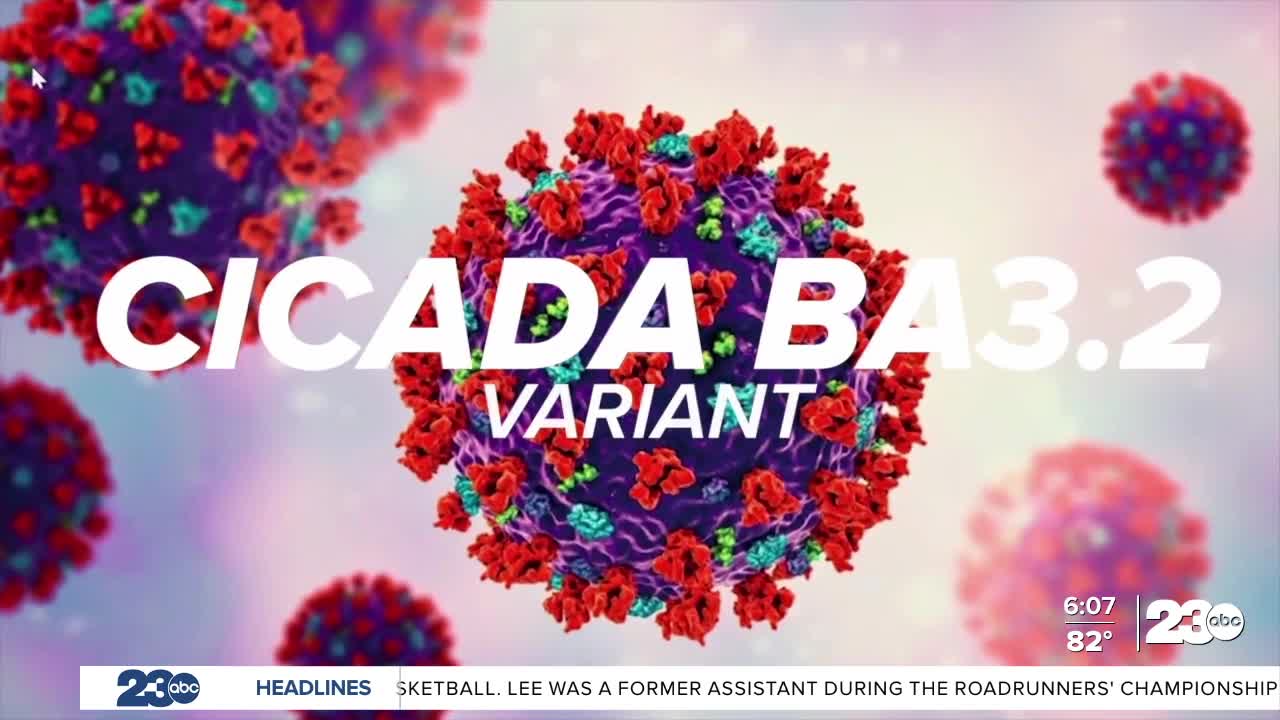


BAKERSFIELD, Calif. (KERO) — A new COVID-19 variant known as “Cicada” has been detected in California, prompting renewed attention from health officials, who say the strain does not appear to cause more severe illness but may be better at evading immunity.
The Cicada BA.3.2 variant was first identified in 2024 and is believed to have originated in South Africa. It has since been detected in multiple parts of the United States, including Kern County, according to local health officials.
“As of right now, it doesn’t appear to be spreading faster than other variants or causing more severe illness,” said Paul Rzucidlo, a local health official. “But it does appear to get around parts of our immune system.”
Healthcare workers in Kern County say early cases resemble previous COVID-19 infections. Maria Gonzalez, a nurse in the area, said symptoms have not been more severe or led to increased hospitalizations.
“There are some cases in Kern County, but the symptoms are not worse than previous variants,” Gonzalez said.
The Centers for Disease Control and Prevention says the variant has been identified through traveler screenings, patient samples and wastewater monitoring, highlighting how closely it is being tracked.
Experts note that virus mutations are expected over time. “The strains we’re seeing now are very different from the original virus in 2020,” Rzucidlo said. “Like the flu, it mutates to survive and spread more efficiently.”
The Cicada variant currently accounts for a little more than 0.5% of COVID-19 cases in the United States but has been identified in more than two dozen states, including California.
Symptoms associated with the variant remain consistent with earlier strains, including fever, chills, sore throat, congestion, shortness of breath and loss of taste or smell. Some people may also experience fatigue, headaches or gastrointestinal issues.
Older adults, unvaccinated individuals and those with underlying health conditions remain at higher risk for severe illness.
Health officials say preventive measures remain unchanged: wash hands frequently, stay home when sick and cover coughs and sneezes. They also emphasize the importance of vaccination.
“Staying up to date on your vaccines remains the most effective way to prevent severe illness and death,” Rzucidlo said. “It may not stop infection entirely, but it helps your immune system respond.”
Officials say that while the Cicada variant is being monitored, basic precautions and awareness can help limit its spread.
Stay in Touch with Us Anytime, Anywhere:
