

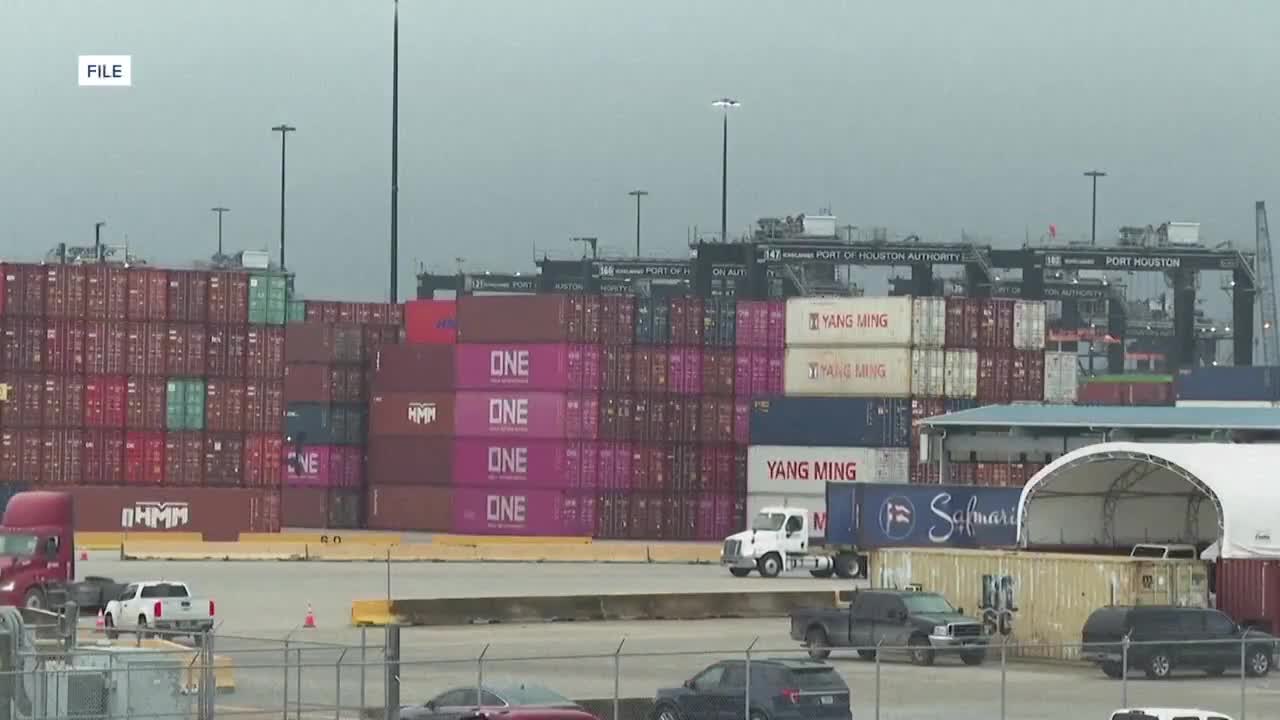


BAKERSFIELD, Calif. (KERO) — A U.S. Supreme Court ruling striking down key tariffs imposed by President Donald Trump is reshaping the administration’s trade agenda, even as new tariffs are set to take effect.
The high court ruled that Trump did not have the authority under emergency powers to impose certain tariffs, saying the power to levy tariffs rests with Congress.
Hours later, Trump announced he would move forward with a new 10% global tariff under a different law.
“Today I will sign an order to impose a 10% global tariff under section 122 over and above our normal tariffs already being charged,” Trump said.
For many Americans, the immediate concern is how the shifting trade policy could affect their wallets.
Richard Gearhart, chair of the economics department at California State University, Bakersfield, said the uncertainty surrounding tariffs could have widespread effects, including in Kern County, where agriculture, manufacturing, energy and distribution play major roles in the local economy.
“It’s just going to be a whole lot of economic stagnation,” Gearhart said. “We’re entering a stretch with high prices, jobless boom, and so I think this is going to be a struggle.”
Gearhart said the unpredictability of tariff policy makes it difficult for businesses and consumers to plan ahead.
“Businesses cannot plan for the next three months into the future because they don’t know where the tariffs are going or what they’re going to be,” he said. “Consumers can’t plan ahead. Retirees can’t plan ahead. Governments can’t plan ahead.”
He said that instability can delay hiring, slow investment and drive up prices on imported goods, from farm equipment to everyday household items.
California Attorney General Rob Bonta said the ruling could also provide financial relief to businesses that paid tariffs deemed unlawful.
“Businesses harmed by these illegal tariffs are entitled to refunds for the costs that they were forced to bear,” Bonta said. “Real relief will be on the way for small businesses, for manufacturers, for farmers, and for workers who paid the price.”
Bonta said businesses seeking refunds would need to pursue them through the U.S. Court of International Trade. The timeline for that process remains unclear.
Despite the court’s ruling, Gearhart said other countries are unlikely to immediately lift their own tariffs on U.S. goods.
“We’re going to continue to see price hikes. We’re going to continue to see businesses not investing in the United States,” he said. “We’re just essentially shooting ourselves in the foot.”
Gearhart also warned that prolonged trade instability could have longer-term economic consequences, including potential impacts on federal programs such as Social Security.
It remains unclear whether the new global tariff will face additional legal challenges.
Stay in Touch with Us Anytime, Anywhere:
