

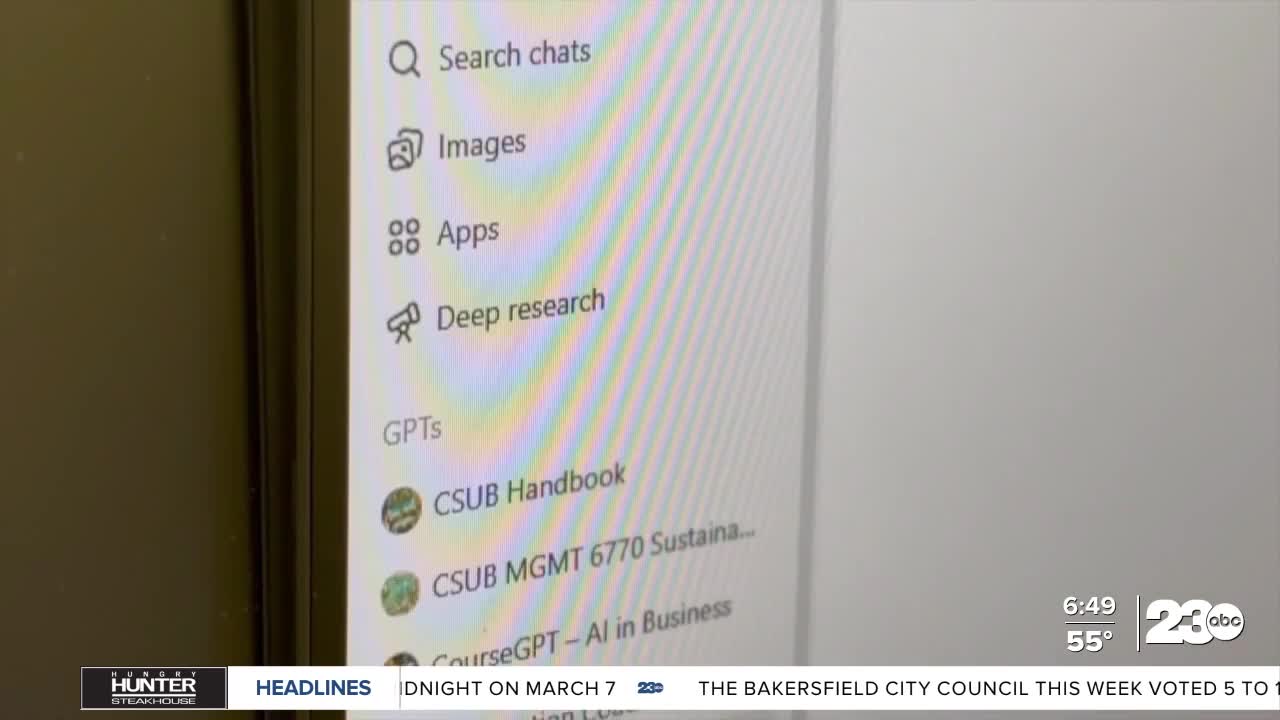


BAKERSFIELD, Calif. (KERO) — Artificial intelligence tools like ChatGPT are increasingly appearing in college classrooms, and at California State University, Bakersfield, professors and students are experimenting with how the technology can support learning while raising new questions about academic integrity and critical thinking.

Milad Pira, a professor at the university, recently demonstrated how he builds coursework using the AI chatbot by entering detailed instructions and course materials directly into the system.
Pira said faculty can train the technology using their own class resources.

“Faculty members can train ChatGPT using our course materials,” Pira said. “Here, I trained a course GPT based on my Business and Society class and its materials.”
In March 2025, the university partnered with ChatGPT, a generative AI chatbot, giving professors the option to integrate the technology into their classes.
Since then, Pira said he has incorporated it into his teaching approach by uploading his course outline, assignments, presentations, due dates and other materials to create a customized AI assistant for the class.
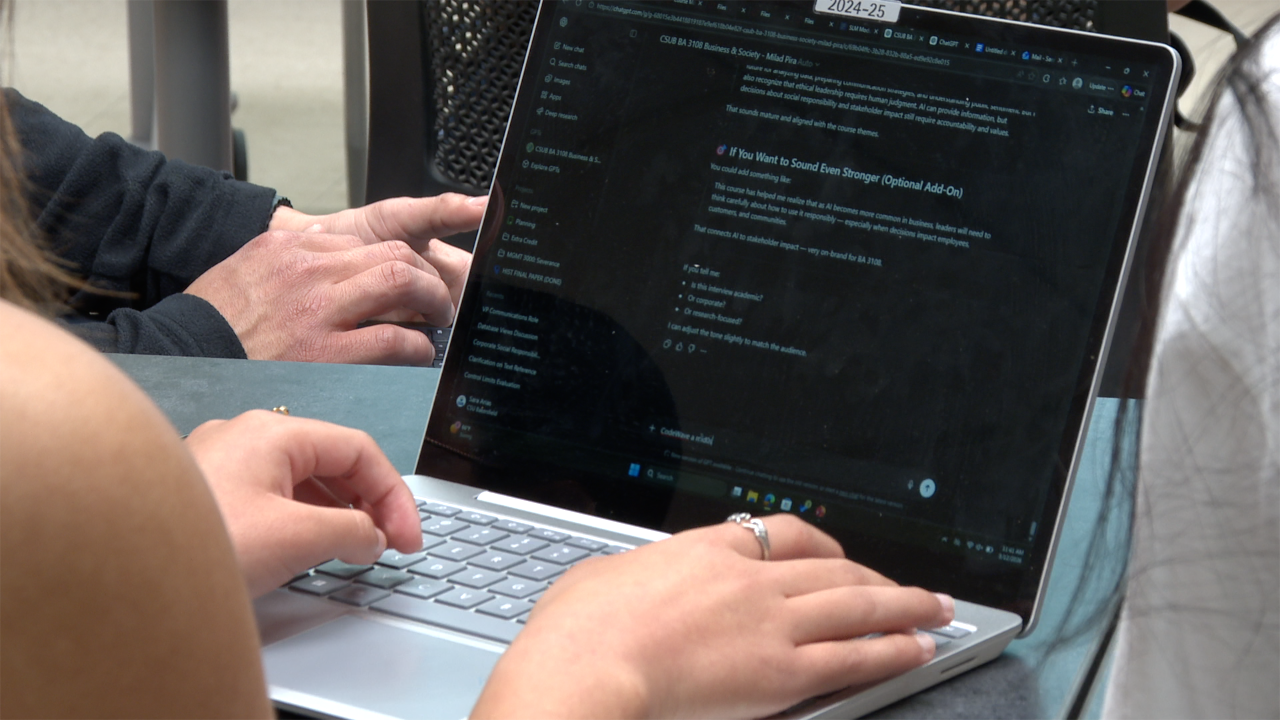
“I trained the system based on my course outline, main assignments, course materials, my presentations, due dates and deadlines,” Pira said.
The setup allows students to ask questions about assignments or coursework at any time even in the middle of the night and receive instant responses from the course-trained chatbot.
During a recent class on developing business models, students tested the tool as part of an exercise designed to evaluate AI-generated answers.
“Identify one weakness, one limited response and finally add one human insight AI has missed,” Pira instructed students.
Senior Gracie Murdoch said the activity emphasized responsibility when using the technology.
“Accountability was the biggest takeaway for us,” Murdoch said.

Another student, senior Kendrykjay Arevalo, said he often uses the course chatbot as a study aid. By uploading course PDFs from the school’s Canvas learning system, he asks the AI to generate shorter study guides from longer readings.
“I upload the PDFs that they have through Canvas and ask it to make me a short study guide instead of 10 pages,” Arevalo said.
Still, not all students are fully convinced about the growing presence of AI in the classroom.
Senior Sara Arias said the technology may help prepare students for modern workplaces but could also have downsides if overused.
“I don’t agree that we should be using it every day,” Arias said. “A lot of people are now lacking those critical thinking skills that we’re supposed to be learning.”
Pira said he emphasizes responsible use and makes clear that AI should support not replace student work.
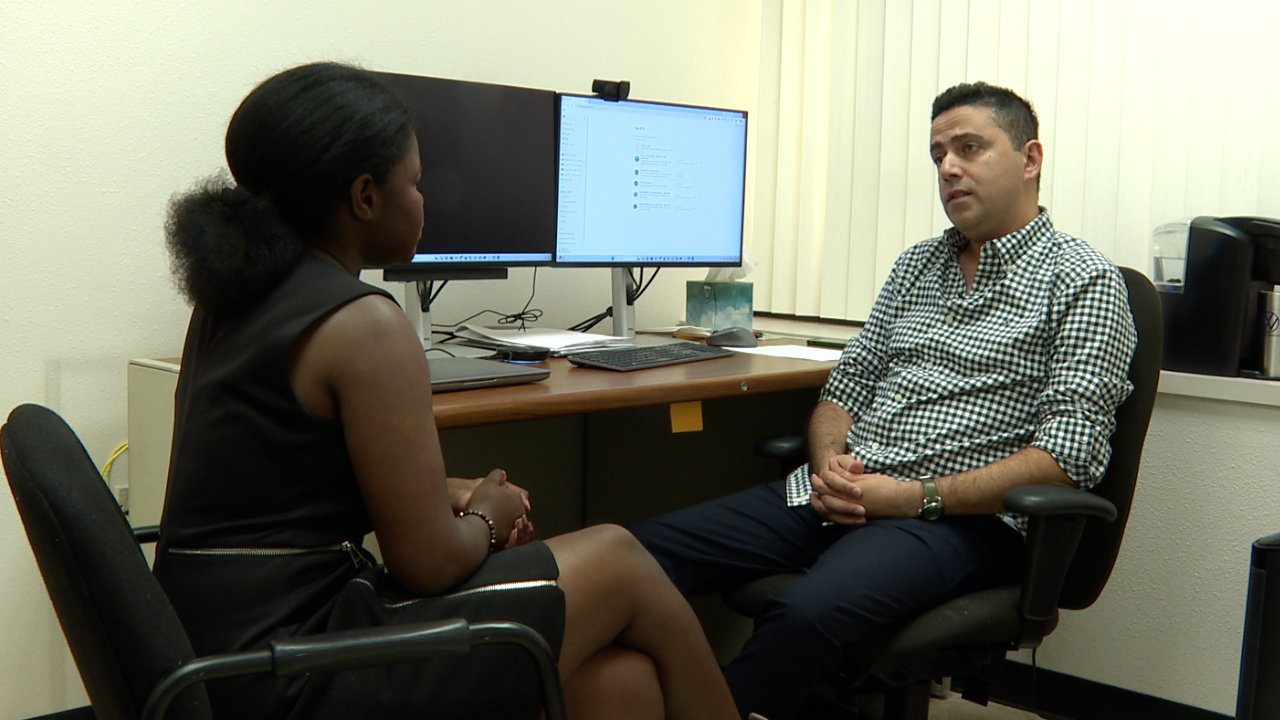
“I’m very clear about integrity,” Pira said. “AI can generate useful content. It can help with brainstorming and insights, but it can’t replace the student.”
As colleges continue exploring how to incorporate artificial intelligence into coursework, the discussion around its benefits and risks is likely to continue.

Stay in Touch with Us Anytime, Anywhere:
