

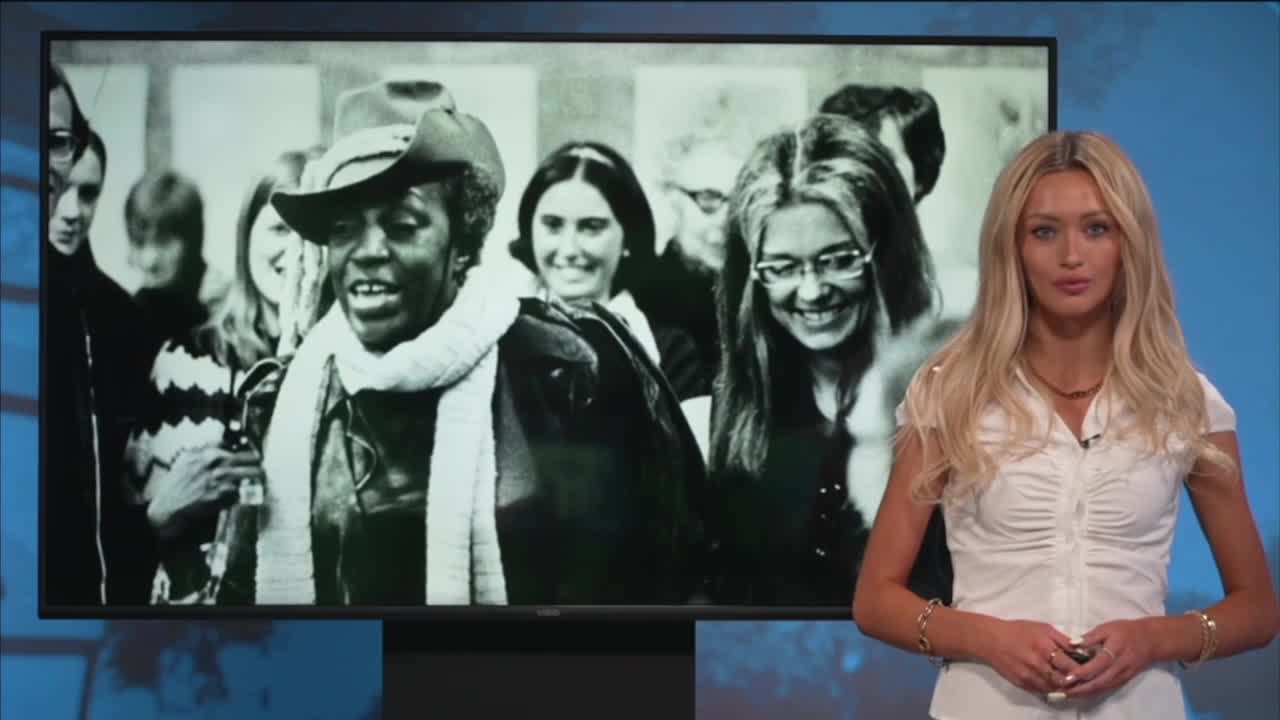


BAKERSFIELD, Calif. (KERO) — The feminist icon's six-decade bond with Dolores Huerta left a lasting mark on both women, and on the movements they led.
Gloria Steinem died Wednesday, Sept. 2, 2026, at the age of 92, leaving behind a legacy shaped by more than six decades of advocacy for women's equality. But in Kern County, her story is also tied to a friendship that helped connect two of the most important social movements of the 20th century.
For Camila Chavez, executive director of the Dolores Huerta Foundation and daughter of civil rights leader Dolores Huerta, Steinem's death is not just the loss of an icon — it is the loss of someone she knew personally, across a lifetime of shared history.
"Of course I was saddened because I have had the opportunity to get to know Gloria and be with her over my lifetime," Chavez said. "It's another shero of the movement who has passed on."
A friendship born in New York, rooted in struggle
The bond between Steinem and Dolores Huerta began in 1967, when Huerta was in New York leading the national table-grape boycott with the farmworkers union. Steinem became a strong supporter of the farmworkers movement, helping introduce Huerta to people who proved instrumental in winning the boycott.
What started as solidarity soon deepened into something more lasting.
"They were really grounded and rooted in their own respective movements and then really being able to bridge, right, that workers' rights are women's rights," Chavez said.
That bridge ran in both directions. Steinem helped Huerta embrace feminism and grow into a stronger voice for women's rights; including, over time, becoming an advocate for reproductive choice. In return, Huerta opened Steinem's eyes to the realities facing farmworkers, working women and women of color.
Steinem once said in an interview that Huerta helped her understand the farmworker struggle in ways she had never personally experienced, from the invisibility of agricultural labor to the devastating health consequences of toxic pesticides in the fields, which contributed to miscarriages and birth defects among farmworker women.
"The feminist movement was highly criticized for being a white women's movement," Chavez explained. "Gloria was able to learn from Dolores and other women of color about how to make it a more inclusive movement."
Two leaders, one shared commitment
Over nearly six decades, the two women stood together at rallies, conferences and public fights for change. Their friendship, Chavez said, was built on something deeper than shared politics.
"It was rooted in just a deep love and respect for one another," she said.
But some of Chavez's most treasured memories of Steinem came far from any podium or protest.
"One of my best memories of her is at a wedding, dancing on a dance floor and doing the bump," Chavez exclaimed. "So many people think of like the serious side, but there's the human side to these leaders."
A foundation still standing — and still needed
Chavez describes herself as a third-generation feminist, part of a lineage that traces back to the pioneers who built the movement from the ground up. She says Steinem was among the first women to speak out publicly and help spark the feminist movement in the United States in the 1960s.
But she is clear that the work is unfinished.
Women remain underrepresented in politics, business and nearly every professional field, Chavez said. The gender pay gap persists. And rights that Steinem's generation fought to secure, including reproductive rights, have since been rolled back.
"They laid the foundation," Chavez said. "It's our job as women to continue and to raise feminist sons and to make sure that men can also consider themselves feminists and that are working toward women's equality."
She added that the overturning of Roe v. Wade, along with rollbacks to voting rights and immigration policy, makes the continuation of that work more urgent, not less.
"Things are getting turned back and so we need to make sure that we continue to fight for what they achieved and to continue to empower women and all disenfranchised communities in our country," Chavez said.
For Chavez, Steinem's death is a profound loss — but not an ending.
"I know that I speak for Dolores, myself, our family, our movement — we've lost a 'shero', and we are committed to continuing her good work," she said.
Stay in Touch with Us Anytime, Anywhere:
