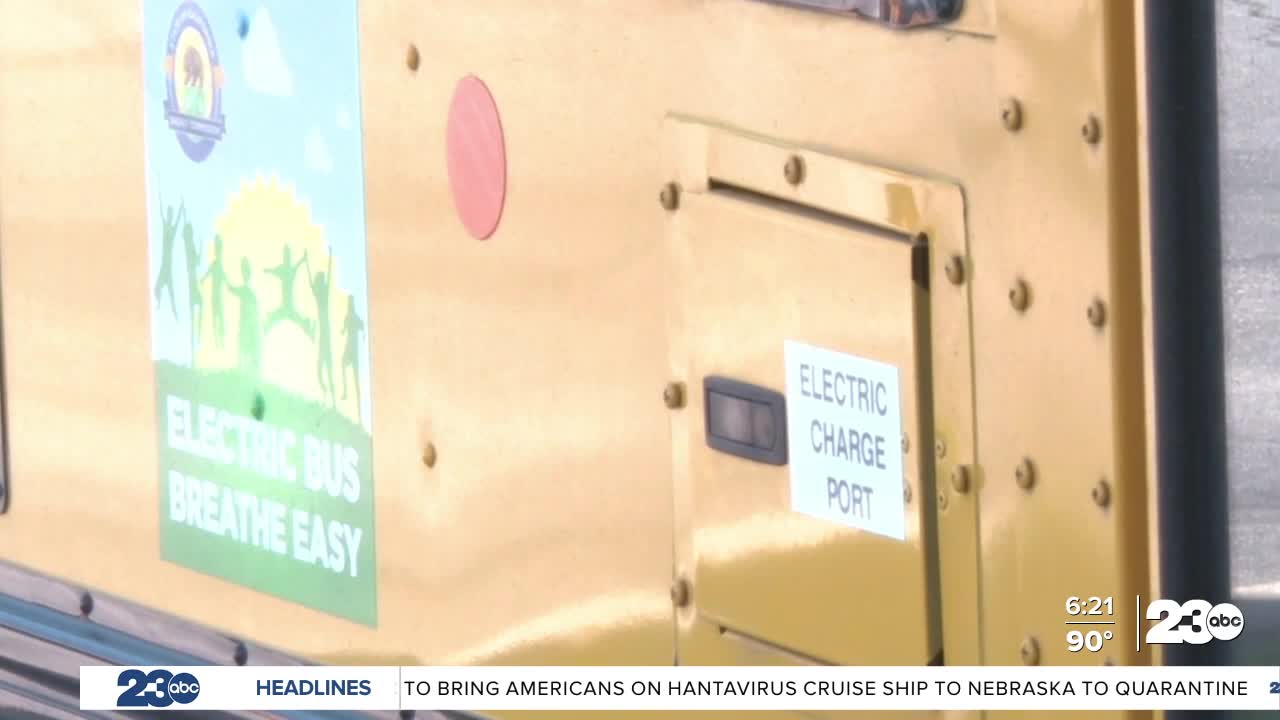


BAKERSFIELD, Calif. (KERO) — James McClelland, senior director of transportation for the Kern County Superintendent of Schools, says the move is about more than just upgrading buses it’s about protecting the environment and improving efficiency.
“There's a benefit to switching to electric,” McClelland said. “It reduces the carbon footprint diesel produces. They are very environmentally friendly, very quiet, and they are designed to help save the environment.”
Since 2019, school districts throughout Kern County have been working toward greener transportation options to help cut down on air pollution. California strengthened that push in 2023 when Assembly Bill 579 became law, requiring all newly purchased school buses to be zero-emission by January 1, 2035.
In 2022, the California Energy Commission awarded 10 electric buses to local school districts.
Now, the San Joaquin Valley office of the Kern County Superintendent of Schools is expanding the fleet even further, securing 23 additional electric buses from clean-energy manufacturer ZESBI.
McClelland says part of the incentive for districts comes from replacing older buses during the transition process.
“Once we trade in the electric buses, we trade in our old buses, and that is part of the incentive for districts,” he said.
District officials also say switching to electric buses is helping reduce long-term transportation costs, especially as fuel prices continue to rise.
“There’s a cost savings in servicing the equipment as well as fuel savings,” McClelland said. “Electrifying these buses costs about a third of what fuel costs.”
While Kern County Superintendent of Schools still has several years before electric buses are fully implemented countywide, some rural districts are already seeing major benefits from state funding.
Rio Bravo-Greeley Union School District secured $3.8 million for electric buses and an additional $2 million for charging infrastructure through state grants.
“Our buses are breaking down they’re just so old. Some are almost 40 years old,” said Kimberly De La Rosa with Rio Bravo-Greeley Union School District.
For districts like Rio Bravo, the transition also means improving comfort and reliability for students.
“We will finally have air conditioning,” De La Rosa said. “We’ll hopefully have fewer breakdowns, so transportation to and from school will be much smoother.”
Most of the districts involved say they plan to fully transition to electric buses by the end of the decade or by 2035, in line with California’s mandate.
However, officials say converting existing bus yards and installing charging infrastructure will take time.
Stay in Touch with Us Anytime, Anywhere: