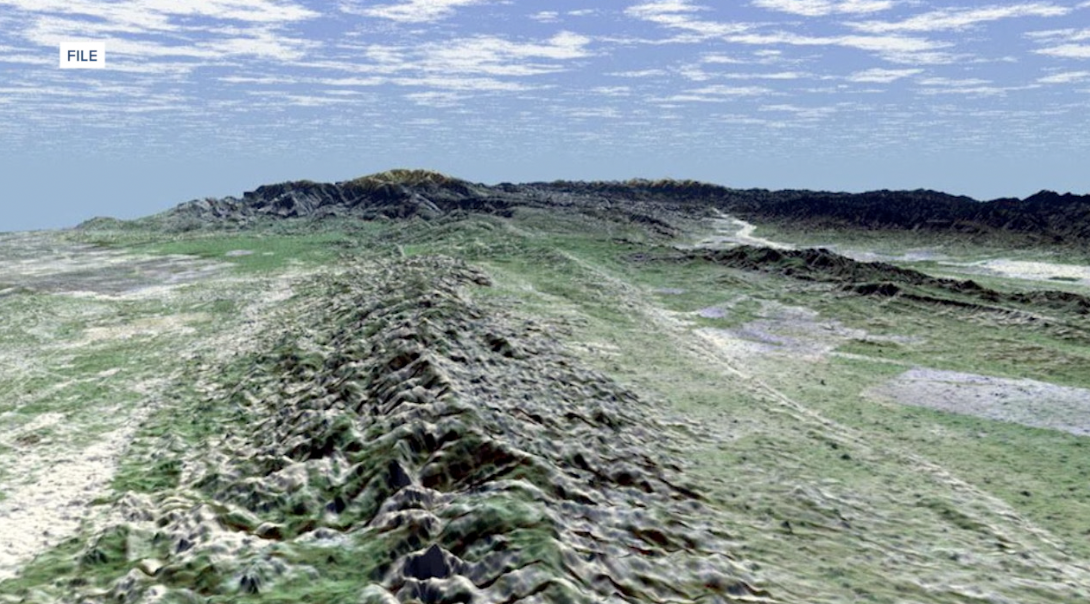


BAKERSFIELD, Calif. (KERO) — Tectonic stress along the Southern San Andreas and San Jacinto faults has reached some of the highest levels seen in the last 1,000 years, according to a new study from the University of Hawaiʻi.
Geologist Matthew Herman says stress has continued building for more than 160 years since the last major rupture on the Southern San Andreas Fault.
"The stresses have built up, and built up, and built up, as there haven't been any big earthquakes, and now we're at a point in time where we've built up, where in historical times there have been earthquakes at these stress levels," Herman said.
The findings come just weeks before a magnitude 7.5 earthquake struck Venezuela, another reminder of how destructive major earthquakes can be. The last great rupture on the Southern San Andreas was the 1857 Fort Tejon earthquake, estimated at nearly magnitude 7.9. The 1906 San Francisco earthquake was another massive San Andreas event that devastated the city.
But the San Andreas isn't the only fault Kern County residents need to worry about, Herman said.
"Folks experienced the Ridgecrest earthquakes not that long ago. Those did a lot of damage in eastern Kern County. In the early 1950s, the White Wolf Fault, just south of Bakersfield, did a ton of damage to downtown Bakersfield, and in Tehachapi," Herman said.
California experiences thousands of earthquakes every year, although most are too small to feel. To mitigate potential damage, Herman says California enacted some of its most pivotal and strict building codes in the 1970s.
"Buildings that were built before those building codes were in effect need to be retrofitted. Not all buildings have been retrofitted," Herman said.
Still, Herman says the new research shouldn't cause panic.
"This changes nothing. You should have been prepared yesterday; you should be prepared today. And if you're not, you should be prepared tomorrow," Herman said.
Experts recommend having an emergency kit, knowing to drop, cover, and hold on, and making a family communication plan before the next earthquake strikes.
"No earthquake scientist can tell you when the earthquake is going to happen. All we can do is prepare ourselves in California," Herman said.
The study helps scientists better understand how stress builds along major fault systems, but it doesn't change one important fact: earthquakes can't be predicted.
This story was reported on-air by a journalist and has been converted to this platform with the assistance of AI. Our editorial team verifies all reporting on all platforms for fairness and accuracy.
Stay in Touch with Us Anytime, Anywhere: