



BAKERSFIELD, Calif. (KERO) — Learning at Kern Community Colleges is about to look very different. As part of a new push toward the future of education, artificial intelligence and virtual reality are being integrated into classroom instruction, giving students a more interactive, hands-on learning experience.
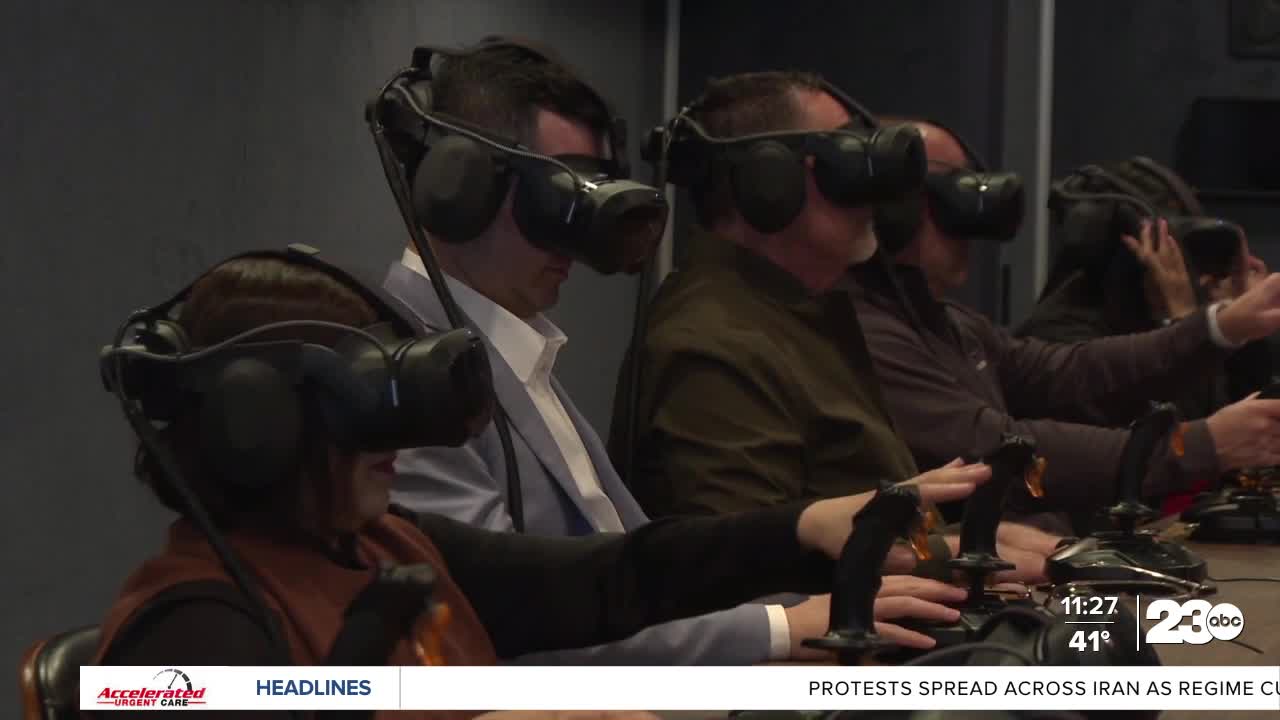
Beginning this fall, professors across the Kern Community College District will start incorporating virtual reality headsets into their lesson plans. The goal is to boost student engagement and make complex subjects easier to understand through immersive technology.
Todd Coston, Associate Vice Chancellor of Planning and Educational Technology for the district, says virtual reality allows students to step directly into their coursework rather than just read about it.
“This is an interactive narrative that leads you into the classwork,” Coston said. “They get into the classroom, do their work, and they’re excited to get back into the virtual reality lab.”
The idea was inspired by similar programs at Arizona State University, where data shows improved grades and higher levels of student engagement.
“Statistics are showing increases in grades and engagement because students are excited about it,” Coston explained.
Using the technology is simple—students just put on a headset. During a demonstration, a short lesson appeared instantly, transporting students to new environments while they learned subjects like chemistry. In just 10 minutes, the experience felt more like a video game than a traditional lecture.
“When students put on the headset, they feel like they’re really there—the vibration, the wind,” Coston said. “It makes learning real.”
District leaders are now testing how virtual reality can be expanded across all Kern Community College campuses, including those in rural areas. Leo Ocampo, Director of Rural Initiatives, says the technology can give students access to experiences that would otherwise be out of reach.
“You can visit places that would normally cost thousands of dollars,” Ocampo said. “With this mobile setup, students in rural communities can experience them.”
Ocampo adds that virtual reality also helps educators reach students with different learning styles.
“It helps us reach as many learning styles as possible,” he said.
Stay in Touch with Us Anytime, Anywhere:
