

(HAVILAH, Calif. (KERO) — Long before Bakersfield became the bustling center of Kern County, it was Havilah, a small town in Kern County's northern mountains.
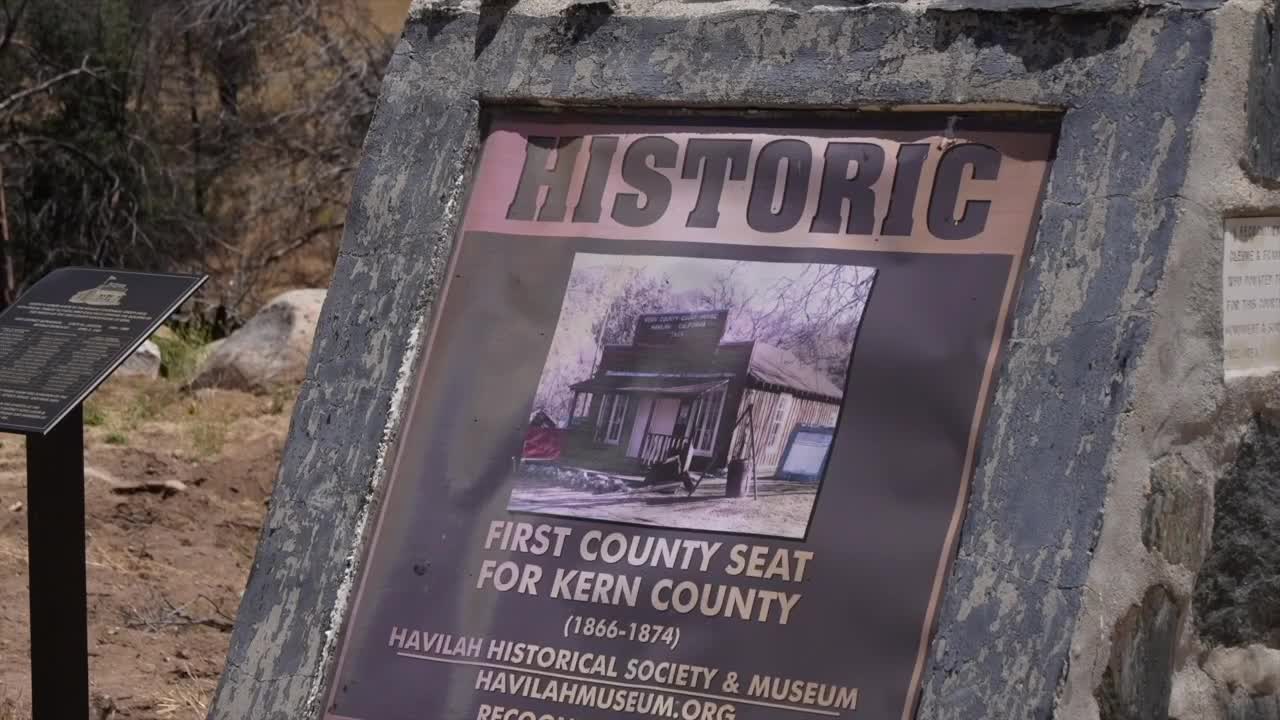
As the United States celebrates 250 years, Havilah is also marking 160 years since becoming the first county seat of the newly formed Kern County.
"According to local stories, someone became upset about not getting enough pie and went on a burning rampage, destroying some of the stamp mills and parts of the town," said Vicki Porter, president of the Havilah Historical Centennial Group. "Like I said, it really was the Wild West."
The nickname was fitting for Havilah.
In the 1860s, while Los Angeles and Tulare had already grown and established their own counties, Havilah was among the more populated communities in the unincorporated area known as Kern Island.
In 1866, it officially became the first seat of the newly formed Kern County.
"Before Havilah became the county seat, people had to travel to Tulare or Los Angeles to conduct official business, such as recording marriages, deaths, business licenses, or other legal documents," Porter said.
Porter shared the town's history inside a replica of the original schoolhouse, one of the first buildings constructed in Havilah alongside a courthouse.
At its peak, the town boasted 13 saloons, four hotels, two breweries, four doctors and a mile-long business district.
But the real draw was mining.
"There were as many as 10 stamp mills crushing ore to extract the gold," Porter said.
At the time, the town had about 900 miners and 25 families.
"This was all hard-rock mining. Workers used handheld drills and sledgehammers to drill holes, packed them with black powder, blasted the rock, and then crushed the ore to recover the gold," Porter said. "It was hard work. You had to be determined."
Mining began to decline during the 1870s as miners turned to agriculture and ranching in the valley.
In 1874, Col. Thomas Baker moved the county seat to Bakersfield.
Life in Havilah continued, however, as a quiet country town, according to Porter, though stagecoach robberies remained an occasional occurrence.
"There was a bank in Havilah, so the stagecoach carried a great deal of money as well as passengers," Porter said. "That made it a frequent target for robbers."
More than a century later, Havilah faced another tragedy.
The 2024 Borel Fire devastated the community.
"It changed Havilah tremendously," Porter said.
The fire destroyed the former Havilah Museum, which was housed inside a replica courthouse.
"Honestly, it was heartbreaking," Porter said. "It was a real shock to see the museum reduced to smoldering ashes. Some of the artifacts we lost simply can't be replaced."
Porter said rebuilding efforts have continued nonstop, though progress has been slow.
The historical society has resumed meeting inside the replica schoolhouse while rebuilding the museum with the artifacts that were able to be saved.
"We've also found everyday items that remind us families lived here—not just miners," Porter said. "Things like soap dishes, tobacco pipes, perfume bottles with their caps still attached, and other personal belongings have been recovered. Those discoveries help tell the story of daily life in Havilah, not just the mining history."
Information about assisting with rebuilding efforts for the Havilah Museum can be found here.
Stay in Touch with Us Anytime, Anywhere: